
Marietta Wood Flooring has handled wood-flooring in Kennesaw for more than 20 years, and a growing share of that work now comes from landlords rather than owner-occupants. The call tends to arrive in summer: a tenant has handed back the keys, the next one is due soon, and the floors show a full year of hard use.
We work to that deadline. We walk every room, read the damage for what it actually is (traffic lanes, pet urine stains, water stains beside the kitchen sink, gouges from dragged furniture) and hand you an itemized estimate that lists each repair by room, with photos, so it lines up against your move-out inspection notes.
From there the choice is yours. A screen and recoat handles a finish that is only scuffed, a full sand and refinish handles wear that has reached bare wood, and board replacement handles damage that goes deeper than the surface. We tell you which one fits the calendar as well as the floor.
Floors in a Kennesaw State Rental Market
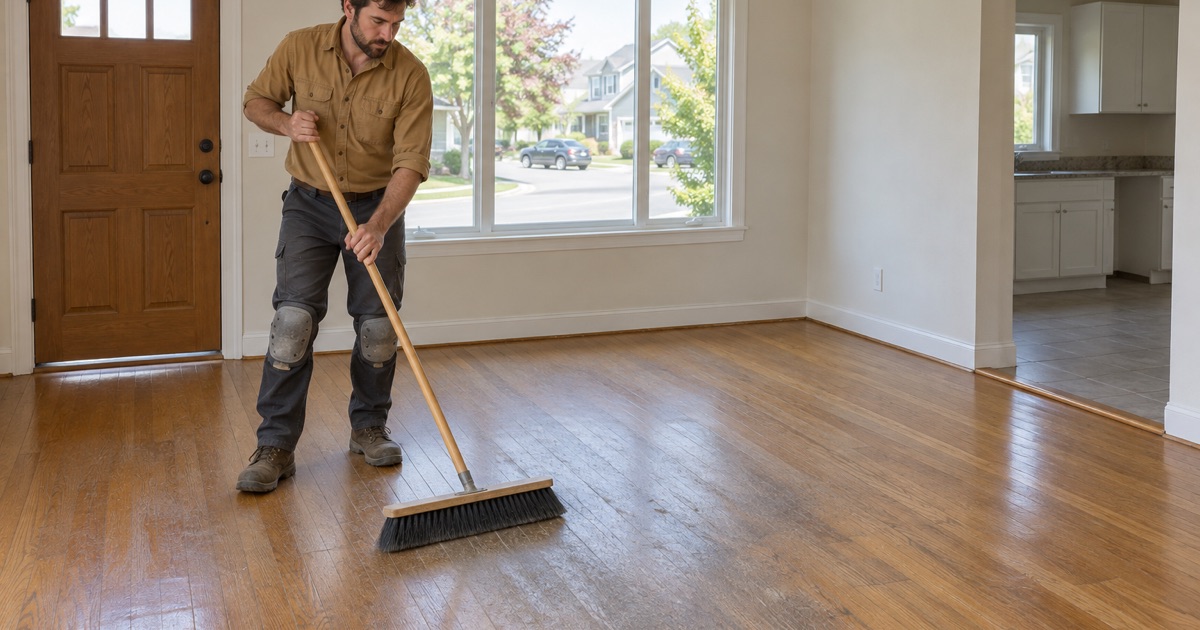
Kennesaw’s rental demand is shaped by the university. Cobb County’s Community Development Agency looked at it directly in its 2018 Purpose-Built Student Housing Analysis, which counts six purpose-built student housing projects constructed since 2012 across unincorporated Cobb County and the City of Kennesaw. The same study notes that there is not enough on-campus housing to keep up with Kennesaw State’s growing enrollment, and that gap is what fills private rentals across the city.
The census numbers show who those renters are. Of the 4,801 renter householders in Kennesaw, 856 are aged 15 to 24, which is 17.8 percent of all renters. Turnover is just as visible: 54.5 percent of Kennesaw renter households moved in during 2020 or later. For a landlord, that means floors are seen by a new set of tenants far more often than floors in an owner-occupied house down the street.
Students in Single-Family Houses
The county study also records something every Kennesaw landlord already knows: students renting houses in existing single-family neighborhoods. Those houses were built for one household and are now shared by several unrelated adults, each treating a bedroom as a bedroom, an office and a living room at once. That changes where a floor wears out.
How Shared Rentals Wear a Floor
In a shared house, the heaviest traffic runs down the hallway between bedrooms and the bathroom, not across the living room. Desk chairs on casters grind the finish in one spot in every bedroom. Furniture gets dragged in each August and dragged out each summer, and each move leaves a fresh set of scratches. Pets, where the lease allows them, leave urine stains that soak past the finish and into the wood. Blinds left open all year put sun fade across the boards nearest a south-facing window, and a rug that sat in one place leaves a darker rectangle behind. We see all of this in a single walkthrough, and the estimate treats each pattern differently because each one needs a different fix.
Looking for wood-flooring closer to Vinings? See Wood-Flooring Services in Vinings.
The August-to-July Lease and the Turnover Window
The purpose-built complexes around Kennesaw State lease by the bedroom, and the county study says all of them run individual 12-month leases from August to July. That calendar sets the tempo for the student rental market, and landlords renting whole houses to students often find their own leases following the same school-year rhythm. When they do, the gap between one tenant leaving and the next arriving is short, and it lands in the busiest weeks of the year for everyone who works on a rental.
Book the Walkthrough Early
The best time to call us is before the tenant moves out, not after. If we can see the floors in late spring, even with furniture still in place, we can tell you whether you are looking at a recoat or a full sand and set a date before the summer schedule fills. The final itemized estimate comes after move-out, once we can see every board, but the slot is already held.
What the Itemized Estimate Shows
Each room gets its own lines. We name the defect (traffic lanes, pet urine stains, water stains, sun fade under a window, gouges, hollow spots underfoot), give the measured area, state the repair we recommend and price it. Dated photos sit beside each line. What you do with that record under your lease is your decision; our job is to make it accurate and easy to read months later.
Order of Work in a Short Gap
Floors go after paint and before the final clean. Painters dripping on a fresh finish, or sanding dust settling on wet walls, costs a day you do not have. We use dustless sanding with vacuum-connected equipment, which keeps most of the dust out of the air, but the rooms still need to be empty and the other trades need to be finished or elsewhere while we work.
Dry Time Versus the Move-In Date
Waterborne polyurethane dries faster between coats than oil-modified polyurethane, which is often the deciding factor in a tight turnover. Dry to walk on is not the same as fully cured, though. Rugs and heavy furniture wait longer, and we give you the manufacturer’s cure times in writing so you can pass them to the incoming tenant.
Refinish, Recoat or Replace Between Tenants
Most of what we do between leases falls into one of three jobs. Choosing correctly is where the itemized estimate earns its keep, because the right answer is often different room by room.
Screen and Recoat When the Finish Is Only Scuffed
If the scratches are in the finish and the wood underneath is still sealed, a screen and recoat is the fastest option. We abrade the existing finish with an orbital sander and lay down a fresh coat. It will not remove stains, gray wood or deep gouges, but it restores the sheen and protection across a room in far less time than a full sand. It only works when the old finish will bond, so we test first; a floor with old paste wax on it needs stripping before anything new goes down.
Full Sand and Refinish When Wear Reaches Bare Wood
Traffic lanes that have gone gray, pet urine stains and water stains need a full sand through a proper grit sequence. Much of Kennesaw’s rental stock is builder oak in subdivision houses; census data puts 45.0 percent of the city’s homes as built in 2000 or later. We refinish that oak rather than tear it out, but we check how much wood remains above the tongue first, because a floor that has been sanded before may not have another sand left in it. If boards near a bathroom or an exterior door have cupped, we take moisture meter readings before sanding, so we are not grinding flat a floor that is still wet and will settle differently once it dries. For older houses, we check the build year before any sanding, because federal lead-safe rules reach homes built before 1978.
Board Replacement and Lacing In
Some damage will not sand out. Pet urine that has turned the wood black, boards split by a dropped weight, and water damage from a leaking dishwasher all mean cutting out boards and lacing in new ones that match the species and width of the run. With water damage, we trace the source, dry the area, and measure and photograph each affected room before anything comes up, which gives you a clean record to keep with the unit’s file. Hollow spots, where a board has let go of the subfloor and flexes underfoot, get re-secured before any finish work so they do not crack the new coat.
Condos and Townhomes
If the rental is a condo or townhome, the association’s declaration may set rules for floor work, from underlayment to working hours. We check your own declaration before we start, so the job does not get stopped halfway by a letter from the board.
Choosing Floors That Hold Up to Shared Rentals
When a floor does need replacing, or when you are pulling out tired carpet between tenants, the choice should reflect how a rental is actually used.
Species and Hardness
Janka hardness is the standard measure of how well a species resists dents. Red oak and white oak are the familiar middle ground and match most builder floors in the area. Hickory rates harder and hides wear well with its busy grain. Maple is hard but shows scratches more plainly because of its even color. For a house shared by several tenants, a harder species and a grain with some movement both buy time between refinishes.
Engineered Boards on a Terrace Level
If a rental house has a finished terrace level, solid hardwood does not belong there. Below grade, the moisture load is too high for solid boards, and they cup or gap within a season. Engineered wood, with a real hardwood wear layer over a stable core, is the right product for that floor. We check the wear layer thickness before recommending one, because a thicker layer can be sanded again after a few rounds of tenants and a thin one cannot.
Finish and Sheen for a Rental
A lower sheen level, satin or matte, hides fine scratches that a gloss finish puts on display, so it holds its looks longer between tenants. We pick clear finishes by their federal VOC category under 40 CFR 59 Subpart D, rather than the floor-coating number meant for opaque coatings, and the product choice gets written into the estimate so you know what is on the floor when the next turnover comes around.
Replacing Carpet With Hardwood
Worn bedroom carpet is one of the most common things landlords ask us to remove between leases. We pull the carpet, carpet pad and tack strip, repair the subfloor where needed, and install solid hardwood or prefinished boards to match or complement the rest of the house. Stairs are part of that work in many two-story rentals, and we price them tread by tread, with risers and stair nosing listed separately, because a staircase does not quote honestly by the square foot.
Tell us the move-out date and the move-in date, and we will tell you what fits between them.
- 20+ Years on Wood Floors
- Free Written Estimates
- Moisture Checked Before Sanding










